Why You Drop Discs on Cold Mornings and What Actually Fixes It
Quick Answer: Cold hands drop discs because tactile sensitivity and grip force both fall as hand temperature drops, and the loss starts around 15-20C skin temperature — well before your hands feel numb. The fixes that work: keep hands warm between points rather than trying to warm them during, use thin tacky gloves rather than thick ones, and adjust technique to a two-handed pancake catch while it is cold.
First point: fine.
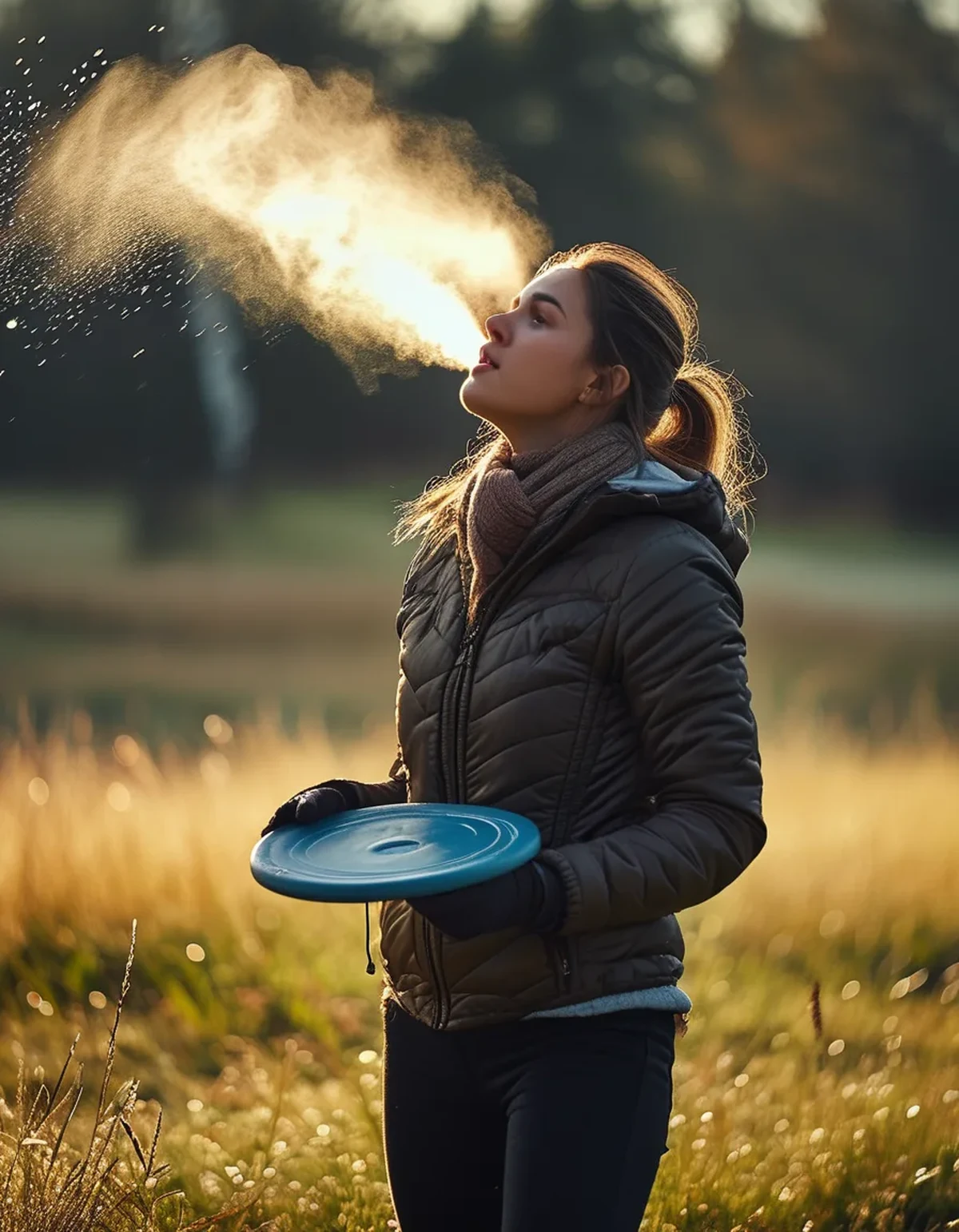
Third point: the disc bounces off your hands like it is made of stone.
Your reactions are fine. Your fingers stopped reporting for duty about ten minutes ago.

What does cold actually do to your hands?
Five distinct effects, and they arrive in an order that makes them easy to misdiagnose.
Tactile sensitivity falls first. Skin receptors that detect texture, pressure and slip become measurably less responsive as skin cools. This happens well before numbness, which is why the drops start while you still think your hands are fine.
Grip force drops. Cold muscle produces less force and the small intrinsic muscles of the hand are heavily affected. You are literally squeezing less hard than you think you are.
Reaction speed of the fingers slows. Nerve conduction velocity declines with temperature. The pancake close happens a fraction late, and a fraction is enough.
Blood is shunted away from the extremities. Peripheral vasoconstriction to conserve core temperature means your hands are the first thing your body is willing to sacrifice. Cold torso causes cold hands — this is why a warmer base layer fixes hands that gloves did not.
And the disc itself changes. Plastic gets harder and less grippy in the cold, and a cold disc feels different in the hand and flies slightly differently. It is not all you.
What keeps hands warm on a sideline?
The principle: maintain temperature, do not try to recover it. Rewarming cold hands mid-game is very slow; keeping them warm is easy.
Warm your torso, not just your hands. A warm core switches off the vasoconstriction that is starving your fingers. A thermal base layer does more for your hands than gloves do — this surprises people every autumn.
Have a warm layer that goes on the second you come off. Not at the end of the game — between every point. Two minutes on a cold sideline in a damp shirt undoes ten minutes of playing warmth.
Use pockets, mittens or a hand warmer between points. Fingers together stay warmer than fingers separated, which is why mittens outperform gloves for standing around.
Keep a dry spare shirt for half time. Wet fabric conducts heat away from you dramatically faster than dry fabric. Changing shirts at half is the highest-value 60 seconds available.
And drink warm fluid. Mostly comfort rather than physiology, but people drink more when it is warm, and dehydration is systematically underrated in cold weather — you sweat plenty and feel thirsty far less.
Do gloves actually help?
Yes, if they are the right ones — and most players buy the wrong ones the first time.
Thin beats warm. A thick glove restores warmth and destroys the tactile feedback you need to catch. Thin gloves with a tacky palm are the standard for a reason: you lose a little sensation and gain grip and warmth.
Fit is everything. Loose gloves fold in the palm, and a fold in the palm at the moment of a pancake catch is a drop. Snug, no bunching.
Test the tack when wet. Dew on a morning field means the glove will be damp within a point. Some tacky palms perform well wet; others turn slick. Find out in training, not in a tournament.
Break them in before you need them. New gloves change your throw release noticeably — flick spin in particular. Two sessions of throwing in them before you play a real game.
And accept the throwing trade-off. Many players catch better and throw slightly worse in gloves. If your role is handler, that maths might not favour gloves; if you are a deep cutter making contested catches, it usually does.
Myth vs Fact: Cold Weather Ultimate
Myth: you drop discs because your reactions slow down. Fact: the primary loss is tactile sensitivity and grip force, and both degrade before you notice any numbness.
Myth: gloves are for players who cannot catch. Fact: thin tacky gloves are standard kit in cold and wet conditions at every level, for the straightforward reason that they work.
Myth: warming your hands is what matters. Fact: warming your torso matters more. Peripheral vasoconstriction from a cold core is what starves your fingers in the first place.
Myth: you should warm up harder in the cold. Fact: you should warm up longer and more gradually. A hard, short warm-up on cold tissue is how hamstrings go, and cold weather raises muscle strain risk on explosive changes of direction.
Myth: you do not need to drink in cold weather. Fact: thirst sensation is blunted in the cold while sweat losses stay real, especially under layers. Dehydration in autumn tournaments is common and invisible.
Myth: the pancake catch is for beginners. Fact: it is the highest-percentage catch available when hands are compromised. Use it deliberately while it is cold and switch back when you warm up.
FAQ: Cold Hands and Catching Questions, Answered
At what temperature do hands start failing?
Grip and sensation degrade as skin temperature falls below roughly 15-20C, which happens at air temperatures well above freezing, especially with wind or damp.
Should I switch to two-handed catches when cold?
Yes. The pancake gives you two surfaces and does not depend on fine finger control. Make it your default until your hands are working.
What gloves should I buy?
Thin, snug, tacky palm, tested wet. Thick and warm is the wrong trade for catching.
Why are my hands cold when the rest of me is warm?
Usually they are not — a slightly cool core triggers the vasoconstriction. Add a base layer before you add gloves.
How long should the warm-up be in autumn?
Add 5-10 minutes versus summer, and build the intensity more gradually. Cold muscle is more injury-prone on explosive cuts.
Does the disc really fly differently in cold air?
Yes, slightly — denser air and a stiffer disc change the feel, and most players find they need marginally more power on long throws.
Do hand warmers help?
For sideline time, yes. They keep the temperature up so you never have to recover it, which is far easier than rewarming.
TL;DR:
- Cold cuts tactile sensitivity and grip force before your hands feel cold — that is the drop.
- Warm your torso first. A base layer beats gloves for keeping fingers working.
- Thin tacky gloves, snug fit, tested wet — thick gloves trade away the feedback you need.
- Default to the two-handed pancake while your hands are compromised.
- Layer up between every point, not at the end, and add 5-10 minutes to your warm-up.
Try the base-layer fix at your next cold session. Most people expect gloves to be the answer and find the thermal top does more.
Keep Reading
This article is for general informational and styling purposes only. Fit, sizing, and product availability may vary.