Why the Disc Flies Differently Once the Weather Turns
Quick Answer: Cold air is denser, which changes lift and drag; a cold disc is stiffer and less forgiving; a wet disc slips at release and changes spin rate; and autumn wind adds a variable that summer play rarely tested. The combined effect is throws that come up short, sit lower, and turn over more than expected. Grip and spin are the two things you can actually control, and both need deliberate adjustment rather than more effort.
Throwing harder is the instinct and it is the wrong answer. Throw with more spin instead.

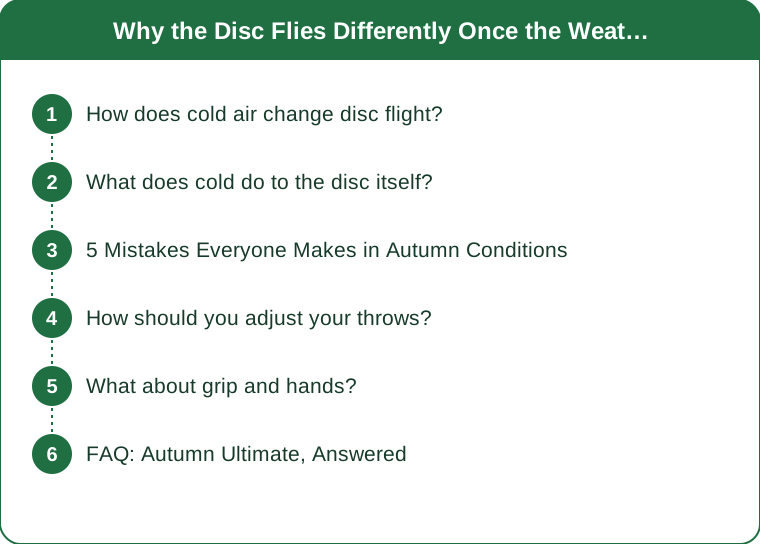
How does cold air change disc flight?
Cold air is denser than warm air, which increases both lift and drag on a flying disc.
More drag means the disc slows faster, so throws come up short at the same power.
More lift changes the flight path, often making discs sit up and float in ways that summer throws did not.
Wind is stronger and more variable in autumn, and a floating disc is much more exposed to it.
The combination produces the classic autumn experience of a throw that looks right leaving the hand and is nowhere near the target.
Adjust the target rather than the effort, since throwing harder generally makes the flight less controlled rather than longer.
What does cold do to the disc itself?
Plastic stiffens as it cools, which changes how the disc flexes in flight and on catch.
A stiffer disc is less forgiving of a slightly off release angle, so errors that summer plastic absorbed now show up in the flight.
Catching a cold disc hurts more, particularly on the hands, which changes how people catch and increases drops.
Cold discs are more likely to crack on hard impact, which is worth knowing before playing on frozen ground.
Keeping a spare disc warm in a bag genuinely helps in cold conditions.
And different plastics behave differently in cold, which is why some players carry a specific cold-weather disc.
5 Mistakes Everyone Makes in Autumn Conditions
Throwing harder to compensate. More power without more spin produces a less stable flight, which is the opposite of what you want.
Ignoring grip until you drop one. A wet disc slips at release and the throw is gone before you notice the grip failed.
Keeping the same flat release angle. Into wind, more spin and a flatter, lower throw beats the summer touch throw every time.
Not warming the hands. Cold hands lose fine control first, and grip strength drops measurably in the cold.
Playing the same offence. Autumn conditions favour short, high-percentage throws, and the deep game that worked in July becomes a turnover machine.
And skipping the warm-up because it is cold and unpleasant - which is exactly when shoulders and hamstrings need it most, since sprinting on cold muscles is the main autumn injury pattern.

How should you adjust your throws?
Add spin rather than power. Spin is what stabilises a disc, and a heavily spun throw holds its line in wind far better.
Throw lower and flatter into wind, keeping the disc out of the air layer where it gets pushed around.
Use more inside-out release into a crosswind and let the wind bring it back.
Shorten the throw selection, favouring high-percentage options over the long ones that worked in dry summer air.
Practise throwing with a wet disc deliberately rather than only discovering the difference in a game.
And warm the disc and your hands between points, since both lose their properties fast standing on a cold sideline.
What about grip and hands?
A wet disc is the single biggest technical problem in autumn, more than cold or wind.
Dry the disc on a towel at every opportunity, and have a dedicated dry towel rather than a wet one.
Grip changes are needed in the wet - a firmer grip with more of the hand in contact than the light summer grip.
Thin gloves designed for disc sports work for some players and are worth trying before dismissing.
Keep hands warm between points, in pockets or a jacket, since cold hands lose fine motor control quickly.
And check the disc for grit, since a muddy disc slips differently and unpredictably. This is general information, not medical advice.
FAQ: Autumn Ultimate, Answered
Why are my throws suddenly short?
Cold air is denser, which increases drag. The disc slows faster at the same power.
Should I throw harder in the cold?
No - throw with more spin. Spin stabilises the flight; extra power without spin makes it less controlled.
How should I throw into wind?
Lower, flatter, and with much more spin. Keep the disc out of the layer where wind pushes it around.
Does a wet disc really change that much?
It is the biggest technical problem in autumn. Grip fails at release and the throw is gone before you notice.
Are gloves worth trying?
For some players, yes, particularly in the wet and cold. Try them in practice rather than in a game.
What is the main autumn injury risk?
Sprinting on cold muscles. Warm up longer than feels necessary, especially hamstrings. This is general information, not medical advice.
TL;DR:
- Cold air is denser, adding drag and lift, so throws come up short and float more than in summer.
- Cold plastic is stiffer and less forgiving of release-angle errors, and hurts more to catch.
- Add spin, not power - spin is what stabilises a disc in wind, and extra power without it makes flight worse.
- A wet disc is the biggest technical problem; carry a dry towel and adjust to a firmer grip.
- Shorten the throw selection, warm your hands between points, and warm up longer than feels necessary.
Throw flatter, spin harder, and let the deep game wait for spring. This is general information, not medical advice.
Keep Reading
This article is for general informational and styling purposes only. Fit, sizing, and product availability may vary.