How to Read the Field Before You Ever Touch the Disc in Ultimate
Quick Answer: Reading the field means tracking your defender’s hips and the disc handler’s eyes simultaneously — a defender’s hips reveal which way they can actually move, and a handler’s eyes usually telegraph the throw 1-2 seconds before it happens.
You watch elite ultimate players and their cuts look almost telepathic — open at exactly the right moment, every time. It’s not telepathy. It’s a specific, trainable habit of watching two things at once instead of just running your route.

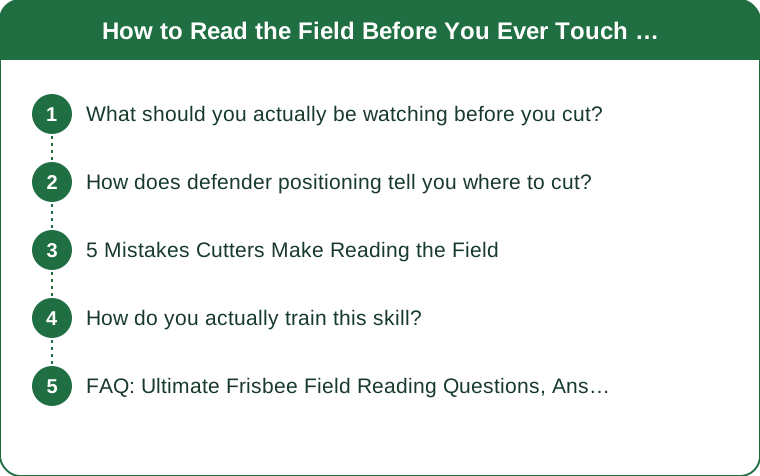
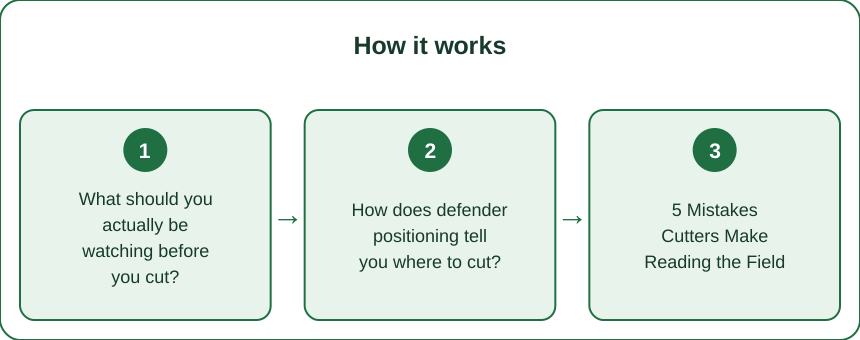
What should you actually be watching before you cut?
Two things simultaneously: your defender’s hip angle, and the thrower’s eyes and shoulders.
Hips reveal true movement capability — a defender can fake with their shoulders, but hips don’t lie about which direction they’re actually loaded to move. Meanwhile, most throwers look at their target for a beat before releasing, giving you a real-time signal of where the disc is about to go, even before you’re the target.
How does defender positioning tell you where to cut?
If your defender is playing you flat-footed and square, they can react equally to any direction — that’s when a fake actually works. If they’re leaning or angled toward one side, that’s the side they’ve already conceded; cut the opposite way immediately rather than into their strength.
This single read eliminates most wasted cuts — you’re not guessing, you’re reacting to information they’re already giving you.

5 Mistakes Cutters Make Reading the Field
1. Watching only the disc. By the time the disc is in the air, your read window already closed — track the thrower’s setup, not the release.
2. Running a route regardless of coverage. A great cut into tight coverage is still a bad cut — adjust based on what the defender gives you.
3. Ignoring your teammates’ cuts. Stacking two cutters into the same lane clogs the space — field reading includes reading your own team, not just the defense.
4. Cutting at constant speed. A change of pace (jog into sprint) beats pure speed for creating separation — defenders react to acceleration, not top speed.
5. No reset plan. If your first cut doesn’t get open, drifting instead of resetting to a new angle wastes the whole possession.
How do you actually train this skill?
Watch film with the sound off and predict the throw before it happens — pause right before release and guess. This builds the eye-pattern-recognition muscle faster than any drill.
On the field, practice naming your defender’s lean out loud during scrimmages (‘he’s cheating left’) — verbalizing forces you to actually process the read instead of just running on instinct.
FAQ: Ultimate Frisbee Field Reading Questions, Answered
How long does it take to get good at reading the field?
Most players notice a real jump after about 10-15 games of deliberately practicing it — it’s a pattern-recognition skill that compounds with reps, not raw athleticism.
Does field reading matter more for handlers or cutters?
Both, but differently — cutters read defenders to find space, handlers read the whole field to find the open cutter. They’re complementary, not separate skills.
Can a slower player still be a great cutter through field reading?
Yes — many of the most effective cutters aren’t the fastest on the field. Reading a defender’s lean and changing pace at the right moment consistently beats pure speed.
TL;DR:
- Watch the defender’s hips (true intent) and thrower’s eyes (early signal) at once
- A square defender can react any direction; a leaning one has already conceded a side
- Change of pace beats top speed for creating separation
- Train it by predicting throws on film before they happen
Field reading is a trainable pattern, not a talent — the players who look telepathic just started noticing these signals earlier.
Keep Reading
This article is for general informational and styling purposes only. Fit, sizing, and product availability may vary.