Why Your Forehand Falls Apart in the Second Half of a Tournament Day
Quick Answer: Forehand accuracy degrades late in a tournament because the small forearm and hand muscles that control disc angle fatigue much faster than your legs do. As grip strength drops, the disc releases with more outside-edge angle and sails. Fix it with a lighter grip pressure baseline, forearm-specific conditioning in the offseason, and a deliberate check on release angle rather than power when you start missing.
Round one your flicks are crisp. Round four they float, curve away from the receiver, and turn over. Nothing about your reads changed — your hand did.
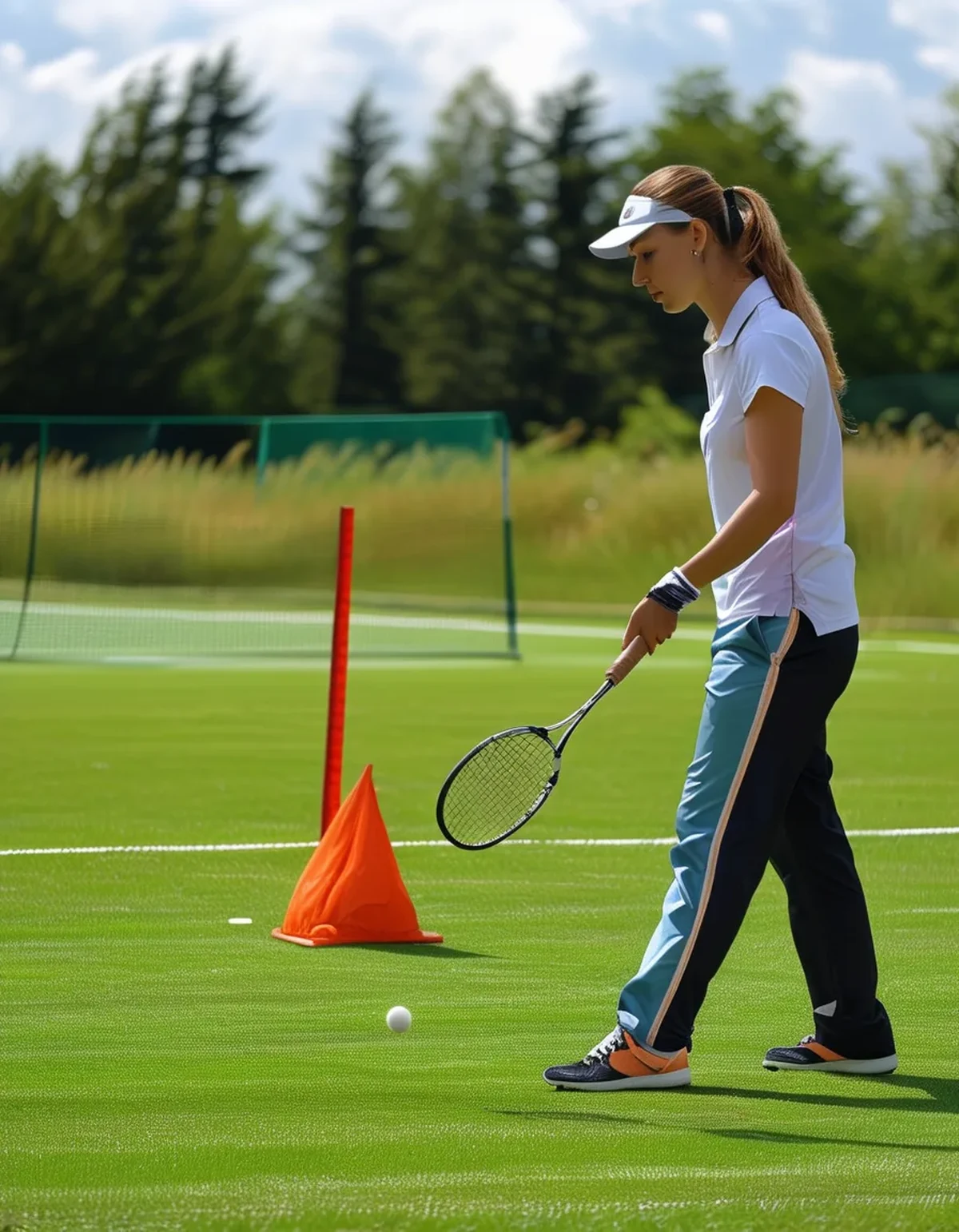
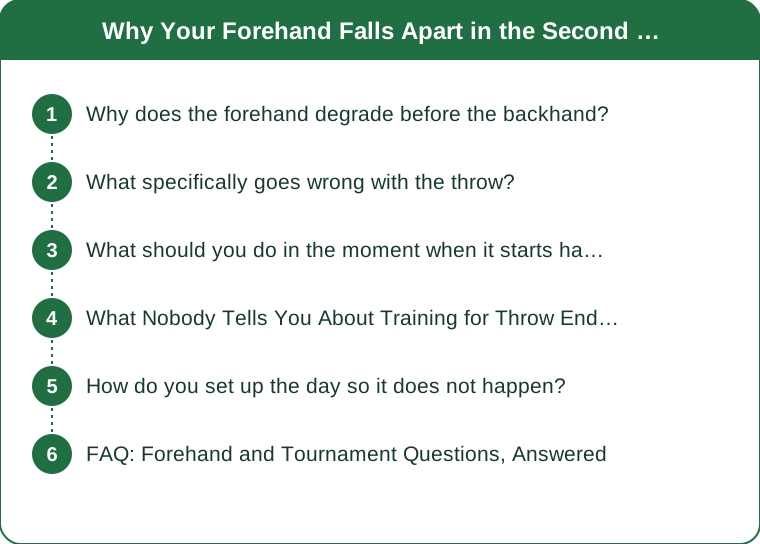
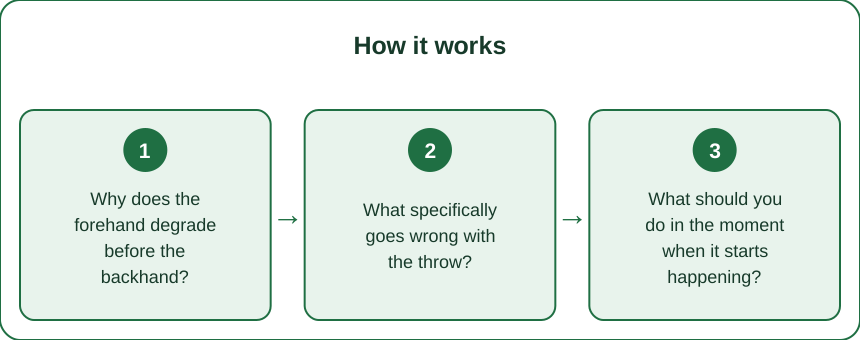
Why does the forehand degrade before the backhand?
Because it depends almost entirely on small muscles. A backhand recruits your whole torso and shoulder through a long rotational path, so the load is spread across large muscle groups with substantial endurance.
A forehand generates most of its spin from wrist snap and finger pressure, driven by forearm flexors and extensors. These muscles are small, they fatigue fast, and they have no larger group to hand the work off to.
By round three of a tournament day, after hundreds of throws plus catching and defensive work, those muscles are meaningfully weaker than they were at warm-up. The disc feels the difference before you consciously notice it.
What specifically goes wrong with the throw?
Two things, and they compound. Grip pressure drops, so the disc sits slightly differently between your thumb and the two fingers underneath, changing the release point.
More importantly, spin rate falls. A forehand with less spin is less stable, which means air does more to it over the flight. A throw that flew flat at full spin will fade to the outside edge at 70 percent spin over the same distance.
The common compensation makes it worse. Feeling the throw fade, most players add arm power, which increases speed without increasing spin — producing a faster, flatter, still-fading disc that now arrives harder and less catchable.
What should you do in the moment when it starts happening?
Shorten the throw and prioritize spin over distance. A 15-yard forehand thrown with full wrist snap is far more reliable at hour five than a 30-yard one thrown with tired mechanics.
Check your release angle deliberately. When fatigued, most players release with more outside-edge tilt than they think. Consciously flattening the disc — or even releasing slightly inside-edge — usually corrects the fade.
Reduce grip pressure rather than increasing it. Squeezing a disc harder when your hand is tired accelerates the fatigue and does not improve control. The correct grip is firm at the contact points and relaxed everywhere else.
And shake your forearm out between points. Thirty seconds of loose shaking does more than any stretch for the specific kind of fatigue you are experiencing.
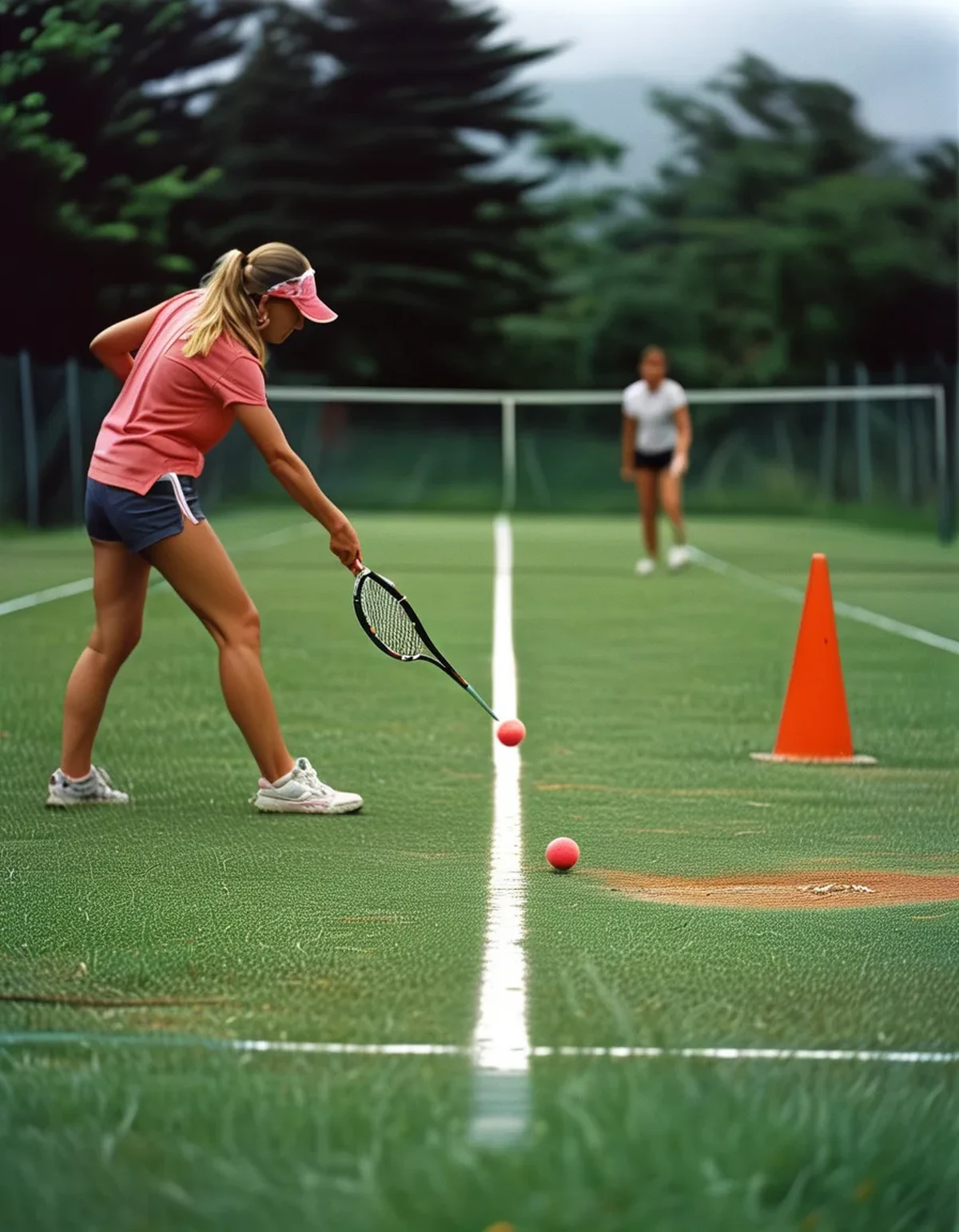
What Nobody Tells You About Training for Throw Endurance
Almost every player trains throwing by throwing, which builds skill but not much fatigue resistance because you stop when you get tired.
Forearm endurance responds to the same principles as any other muscular endurance — higher rep, lower load work. Wrist curls and reverse wrist curls with light weight for sets of 20 to 25, twice a week, are unglamorous and effective. Farmer’s carries build grip endurance in a way that transfers directly.
The part nobody mentions: disc weight matters for training. Throwing a heavier disc for a portion of your practice overloads the same pattern, but the technique transfer is imperfect, so keep it to a small fraction of throws.
The other thing nobody mentions is hydration’s role in grip. Even modest dehydration reduces fine motor control measurably, and a tournament day is where that shows up. Your forehand at hour five is partly a hydration story, not just a strength one.
And the honest one: most players never practice throwing while tired. Ending a conditioning session with 40 forehands is the single most specific thing you can do, and almost nobody does it because it feels like a bad way to end a workout.
How do you set up the day so it does not happen?
Warm up your throws properly and stop before your arm is tired. A long pre-tournament throwing session feels productive and costs you the fourth round.
Spread the throwing load across the day. If your team has multiple handlers, rotating who takes the reset throws early preserves everyone’s late-day accuracy.
Eat and drink on the schedule you would use for any endurance event — small amounts frequently, with sodium, rather than a large lunch between rounds. Grip strength is one of the first things to go with dehydration and one of the fastest to return with fluids.
And accept the tactical adjustment. Late in a tournament day, a team that shifts toward shorter throws and more movement usually beats a team insisting on the same throw selection they had at 9 a.m.
FAQ: Forehand and Tournament Questions, Answered
Should I change my grip when my hand is tired?
No. Changing grip mid-tournament introduces a new variable when you are least equipped to control it. Change the throw distance and the release angle instead.
Does taping fingers help?
It helps with blisters and skin damage, which are real limiters on day two of a weekend tournament. It does not address muscular fatigue.
Why does my elbow ache after tournaments?
Repeated forehand snap loads the forearm extensor origin at the outer elbow. Persistent pain there is worth getting looked at — this is general information, not medical advice, and lateral elbow issues respond much better to early attention than to a season of ignoring them.
TL;DR:
- The forehand relies on small forearm muscles that fatigue long before your legs do.
- Lost spin, not lost power, is what makes late-day throws sail.
- In the moment: shorten the throw, flatten the release, loosen the grip.
- In the offseason: high-rep forearm work, carries, and throwing practice while already tired.
Every tournament has a round where the winner is simply the team whose handlers can still throw. That is a trainable quality, and almost nobody trains it. Two sessions a week through the winter changes what your fourth round looks like.
Keep Reading
This article is for general informational and styling purposes only. Fit, sizing, and product availability may vary.